
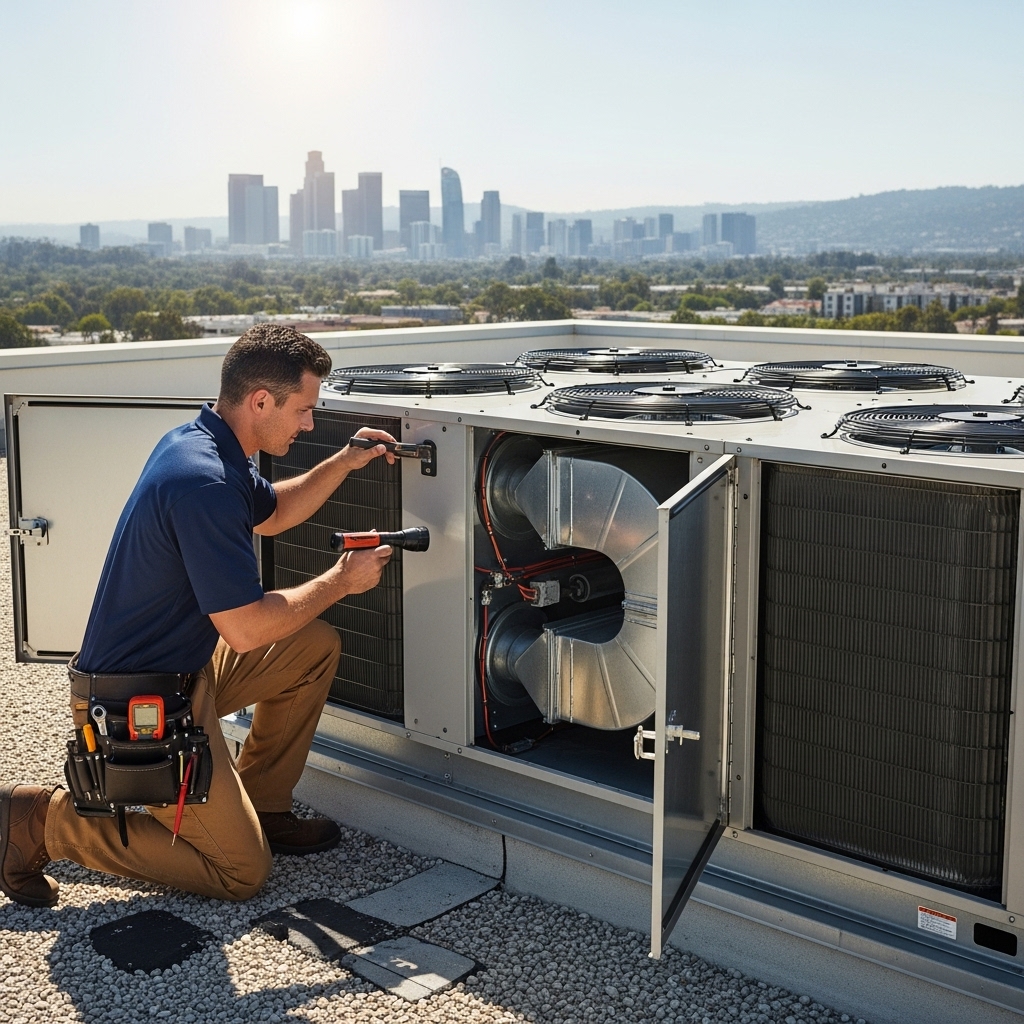
Commercial spaces in Woodland Hills shoulder a unique set of demands. Restaurants with dinner rushes, boutiques with wide storefront windows, fitness studios packed in the evening, and professional offices that run long days all rely on HVAC systems that can adapt to real-world conditions. When the Valley turns up the heat, comfort becomes part of the customer experience and the workday rhythm, and that is where understanding common repair issues pays off. Knowing what tends to go wrong, why it happens here, and how to address it quickly gives local businesses a competitive edge and protects productivity. Early in the season, scheduling professional HVAC repair often turns “manageable annoyances” into non-issues before they escalate into downtime.
One of the most frequent commercial pain points is airflow imbalance. Rooftop units that serve multiple zones can drift out of calibration over time. Dampers move, belts stretch, and filters load unevenly across the building. The result is familiar: front-of-house that bakes in the afternoon sun while back offices feel like a walk-in cooler. In spaces with high glazing facing Ventura Boulevard or Topanga Canyon Boulevard, late-day solar gain builds quickly, and without responsive airflow, thermostats in other zones may be satisfied while the sales floor sweats. Repairing damper actuators, correcting belt tension, and verifying fan speeds are foundational steps that restore balance.
Another issue that shows up repeatedly is economizer failure. Many commercial units include economizers designed to bring in cool outside air when conditions are right. In Woodland Hills, those shoulder-season mornings can be perfect for free cooling, but when sensors drift or dampers stick, the economizer can let in hot, dusty air during the afternoon or lock out ventilation entirely. Technicians who test sensors and recalibrate controls complete essential repairs that prevent humidity swings, improve indoor air quality, and reduce energy waste during long cooling seasons.
Refrigerant leaks are common across commercial portfolios, particularly in older rooftop equipment exposed to sun and vibration. Leaks erode capacity gradually; a unit might seem fine in June but struggle by late July when the load intensifies. Ice formation on coils, longer runtimes, or poor dehumidification are telltale signs. A professional evaluation that includes leak detection and precise recharging brings the refrigeration circuit back into spec, protecting compressors and ensuring the unit can handle peak afternoons.
Electrical reliability is a major factor for businesses where predictable operation underpins sales and service. Contactors pit, capacitors weaken, and wiring connections loosen under heat and vibration. Because commercial systems cycle frequently with door traffic and varying occupancy, these components see even more wear than in homes. Proactive repair—replacing marginal capacitors, tightening connections, and testing under load—prevents outages that force you to send staff home or frustrate customers.
Ventilation and indoor air quality are no longer optional. In Woodland Hills, where wildfire smoke and dust can appear suddenly, a building’s ability to manage intake air matters for customer comfort and for staff wellness. Repairs that ensure outside air dampers are responsive, filters are properly seated, and fans deliver the right airflow keep particulate levels in check. For restaurants or fitness studios with high respiration rates, consistent ventilation is part of the business model; it keeps the environment feeling fresh even during peak occupancy.
Thermostat battles are a classic office meme, but in real terms they often point to repair needs. A zone sensor placed in a draft, an uncalibrated thermostat, or a miswired control can produce wild temperature swings. In a conference room, that might mean stuffy morning meetings and overly cold afternoons. In a retail space, it translates to uncomfortable shoppers who cut visits short. Repairing sensor placement, calibrating thermostats, and verifying zoning logic bring control back to the occupants rather than letting the building’s quirks dictate comfort.
Drainage issues also rank high on the commercial list. Condensate lines serving rooftop units clog with debris, algae, or dust carried on the wind. When they back up, you may see indoor water stains, ceiling tile damage, or even slipping hazards if a leak finds a path into public spaces. Clearing and treating drains and verifying traps are correctly configured is a simple repair that prevents messes and protects interiors, especially during long, humid cooling cycles.
For businesses with kitchens, salon stations, or server rooms, localized heat loads make HVAC repairs even more targeted. A salon’s blow-dry area adds a persistent heat source; a kitchen introduces moisture and heat that demand high-volume exhaust paired with balanced make-up air; server closets produce concentrated heat that requires dedicated cooling or careful ducting. Addressing these edge cases with specific repairs—better balancing around the hot zone, correcting exhaust interactions, or installing a dedicated return—keeps the overall system stable.
Sometimes the problem is not a component but the building itself. Older Woodland Hills commercial structures may have undergone remodels that changed interior walls and returns, creating dead zones where air does not circulate. Open-the-door policies add frequent temperature shocks. In these cases, repair work looks like a deep tune of airflow: measuring static pressure, adjusting fan speeds, sealing obvious duct leaks, and sometimes relocating a sensor. The result is a space that recovers quickly after a rush of customers and feels consistent throughout the day.
On the financial side, businesses benefit from repair strategies that minimize disruption. Early morning appointments, planned downtime during slower hours, and clear scopes of work let operations continue smoothly. Technicians who understand commercial timelines and can stage repairs—addressing critical items first and deferring minor issues to off-hours—become invaluable partners. This not only restores comfort faster but also reduces the sense of crisis around HVAC events.
Communication with your service provider is essential. Keep a log of comfort complaints and when they occur: late afternoon in the front of the store, mornings in the conference room, or after the fitness studio’s 6 p.m. class. Pairing those notes with data from controllers helps pinpoint root causes. When a repair visit focuses on patterns rather than isolated moments, you get solutions that stick—like correcting a return path that only struggles during high occupancy or reconfiguring an economizer that misreads hot afternoons.
The valley environment adds a few wildcards. Santa Ana winds can push dry, warm air that causes doors to slam and intake dampers to flutter. Wildfire smoke can arrive with little notice, and rooftop equipment sits right in the flow. Repairs that add weather hoods, improve damper seals, and verify pressurization help maintain indoor consistency when the outside world is anything but. It is not just about temperature; it is about preserving the quality of the experience your business promises.
Preventive repair is a concept worth embracing. Instead of waiting for a failure, target the components most likely to falter under peak loads and fix them before they do. That means refreshing marginal capacitors, replacing noisy bearings, and recalibrating economizers at the start of the season. It is a pragmatic approach that respects the realities of commercial operation: a small investment in May or early June averts bigger disruptions in August.
Staff training can support these efforts. Simple habits—reporting unusual noises promptly, keeping supply registers unblocked, closing doors when possible during peak heat, and noting thermostat anomalies—give your service provider better information. When the tech arrives, you are not starting from scratch but handing over a clear picture of the building’s behavior, which makes repairs faster and more targeted.
Ultimately, the goal of any repair plan is to protect the business experience. Comfortable staff work better and longer, customers linger in spaces that feel inviting, and equipment that runs as designed spends less time failing and more time quietly doing its job. In Woodland Hills, where weather can be intense and expectations are high, making HVAC reliability a core part of your operations plan pays off every single day.
What are the top HVAC repair issues for Woodland Hills businesses?
Airflow imbalance, economizer failures, refrigerant leaks, electrical component wear, and condensate drain clogs top the list. Each issue reduces comfort and reliability, and each becomes more pronounced during extreme heat or high occupancy.
How can we reduce hot and cold spots in our space?
Schedule a repair visit that includes airflow measurements, damper verification, and control calibration. Balancing air, fixing leaks, and relocating sensors when necessary delivers even temperatures across zones.
Why does our system struggle in late afternoon?
Solar gain through windows, increased door traffic, and heat from equipment or occupants all converge late in the day. Addressing airflow, ensuring proper refrigerant charge, and verifying economizer control help the system keep pace when the load peaks.
What should we do when smoke or dust impacts the area?
Ensure filters are seated and changed on schedule, dampers operate as intended, and that outside air is controlled. Repairs that tighten return paths and seal obvious leaks help keep indoor air cleaner during poor outdoor air quality events.
How can we plan repairs to minimize downtime?
Coordinate early morning or off-hour appointments, prioritize critical fixes first, and maintain a log of symptoms. Clear communication with your provider lets you stage work and avoid surprises during business hours.
Is preventive repair worth it for commercial systems?
Yes. Addressing known wear items and recalibrating controls before peak season reduces failures, protects comfort, and keeps staff and customers happy when demand is highest.
If your building has been working harder than it should or complaints are becoming a daily occurrence, now is the time to schedule expert HVAC repair. With focused attention on the issues that matter most in Woodland Hills, your business can deliver a consistently comfortable, inviting space—no matter what the forecast says.